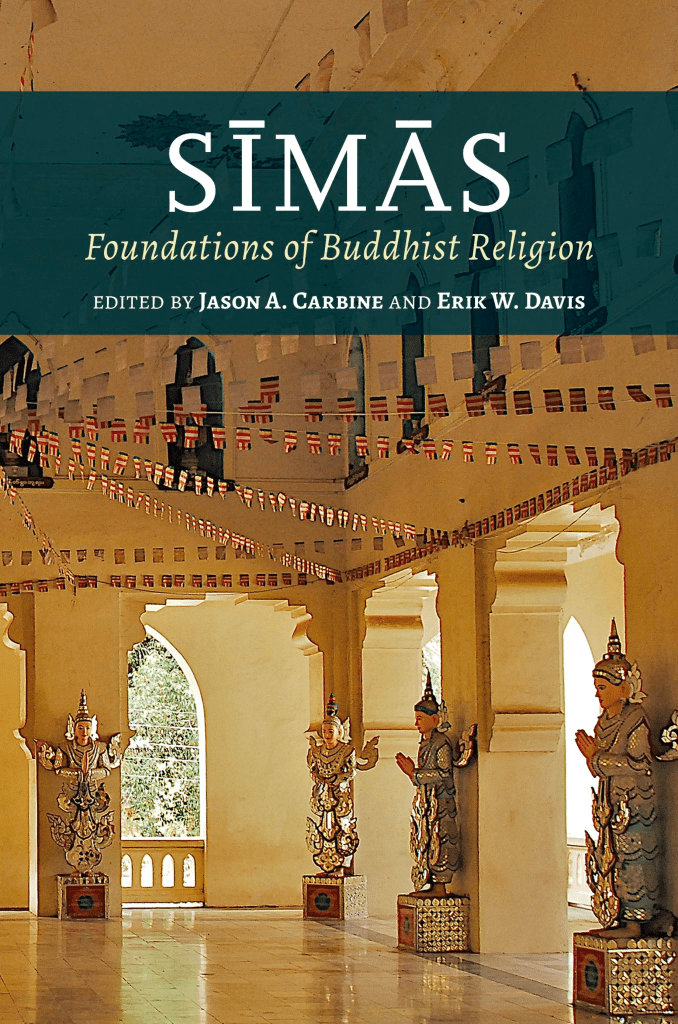
This week’s New Pubs features Campbell’s new book on life in Yangon’s informal settlements; Lahkyen Roi challenges extractivism in Kachin State; and Yaw Htung on the relationship between Kachin conceptions of ethnicity and the Kachin ethnonationalist movement .
This week’s New Pubs features the GSCN’s big report on post-coup revolutionary movement; Foxeus on the Buddhist nationalist rituals; and Thakur on the issue of global cruelty, with Myanmar’s treatment of Rohingya as a case.
Since the protracted ethnic cleansing of the Rohingya (episodes in the 1950s, 1978, 1992-94, 2012, 2017) recently became an object of scholarly attention, the Rohingya’s standing as an ethnic group has generated intense scrutiny. The same attention, sadly, has not always been focused on other ethnic groups in Myanmar, resulting in the Rohingya appearing to be a “political” identity when the others are simply “natural.” The Rakhine, for instance, are often taken as existing since time immemorial.
Kyaw Minn Htin’s PhD dissertation challenges that presumption, examining the historical processes of ethnogenesis that have led to the construction of the Rakhine. As he argues, “In the not-so-distant past, Burmese from Myanmar proper and Arakanese-speaking peoples themselves considered the Arakanese to be Myanmar (Mranmā) or ‘Burmese.’ In pre-colonial Arakan, these Arakanese speakers assumed various local identities depending on their place of dwelling, and it was in later colonial descriptions that the people who lived within the boundary of the map of Arakan were | collectively categorised as ‘Arakanese’” (13-4). This provocative thesis also includes arguments about the pre-colonial Muslim populations in Arakan (proto-Rohingya) and what happened to that identity after successive waves of in-migration from Chittagong during the colonial era.
This week’s New Pubs features an economic analysis of the gender wage gap in Myanmar; Pachau and van Schendel on human-animal-plant interactions in the greater Himalayan region; and for you international relations lovers, Dossi and Gabusi on China-Myanmar relations.
Call for applications: AAS is now accepting proposals for 2022-2023 Cultivating the Humanities and Social Sciences Research Grants, available to scholars from South & Southeast Asia. See details at website and submit applications by September 30, 2022. https://buff.ly/3zp2X5l
This week we feature a mostly Burmese language journal, devoted in this issue to study of village social life. See articles by Myat Thein, Mya Than, Maung Aung, Aung Ni Oo, Aung Aung Hlaing, and others.
ICIRD7 hosted by Chiang Mai University under the theme “Disruption, Challenges and Resilience in Contemporary Southeast Asia” will run from 22-23 July 2022.
This week’s New Pubs focus on humanitarian conditions, with IFPRI focusing on post-coup Myanmar and Chowdhury et al on Rohingya refugees in Bangladesh camps. Third, Anwary writes on the agency of female Rohingya genocide survivors;
Geoff Aung’s searching essay on the anti-coup rebellion from last year included a discussion of the ah-zah-ni, perhaps best translated as “martyr,” and a critical figure in Burma’s long history of resistance to authoritarianism, colonial or afterwards.
This week we feature some texts that sketch the contours of the ah-zah-ni. Nick Cheesman’s Master’s Thesis that covered school textbooks in Myanmar (featured in DC recently) discusses the ah-zah-ni (pp 215-18).
The anthem kaba ma’ chay bu: (“The world is not fulfilled”), written by Naing Myanmar after the 1988 anti-government uprising, contains the line ah-zah-ni dway nay de’ dain: pyi – “The country where the martyrs live.” We include Min Zin’s essay; see pp 225-26 for a discussion of the song.