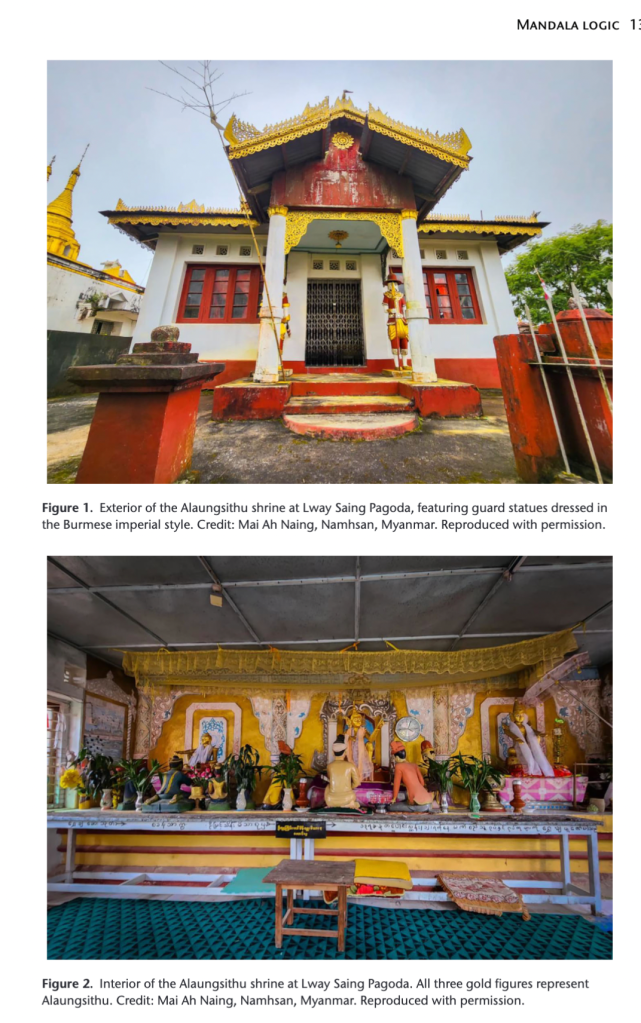
This week’s New Pubs features Dunford on myths and mandala logic in Ta’ang areas; Crouch on constitutional law in Myanmar; and Huard’s anya book in Burmese translation (available for download);
See our Recent Publications page for all of the citations and for past weeks, and if anyone wants a PDF but is excluded by pay wall, please email us and we will help if we can.
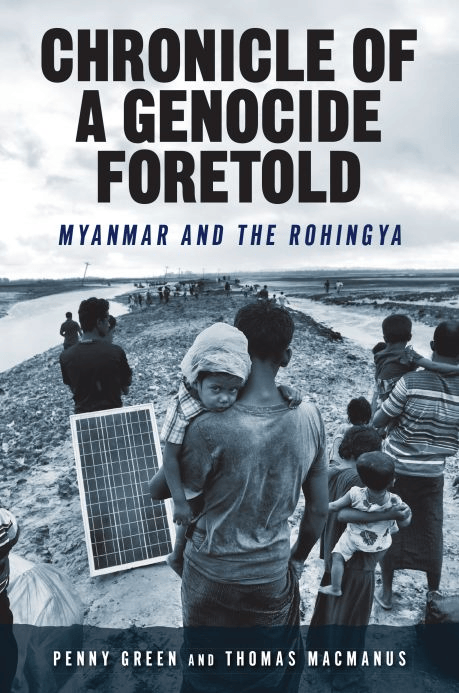
This week’s New Pubs features Green and MacManus with a book on the international community’s complicity in the Rohingya genocide; Vester et al on how the NUG has used digital technologies to raise money for governance; and Fung et al on rethinking research ethics in Myanmar.
See our Recent Publications page for all of the citations and for past weeks, and if anyone wants a PDF but is excluded by pay wall, please email us and we will help if we can.
Voices from the Border: Insights from the Thai-Myanmar Border and Cox’s Bazar
Join Settlement Services International (SSI), the Asia Pacific Refugee Rights Network (APRRN) and Amnesty International Australia for the launch of our joint advocacy report and a moderated panel discussion sharing insights from our June 2026 field trip to Thailand and Bangladesh.
Over the course of the field-trip, our teams engaged with refugee-led and women-led organisations, UN agencies, government representatives and civil society partners across the Thai-Myanmar border and Cox’s Bazar, gathering firsthand accounts of displacement, protection gaps and community-led responses.
This event will bring together speakers from the field trip and partner organisations to discuss key findings, on-the-ground realities, and what meaningful international engagement and advocacy can look like going forward. The discussion will also examine Australia’s specific role in the Asia-Pacific region in advancing refugee protection and promoting human rights.
What to expect:
Launch of SSI, APRRN and Amnesty International Australia’s joint advocacy report
Panel discussion with speakers from the field mission (to be confirmed shortly)
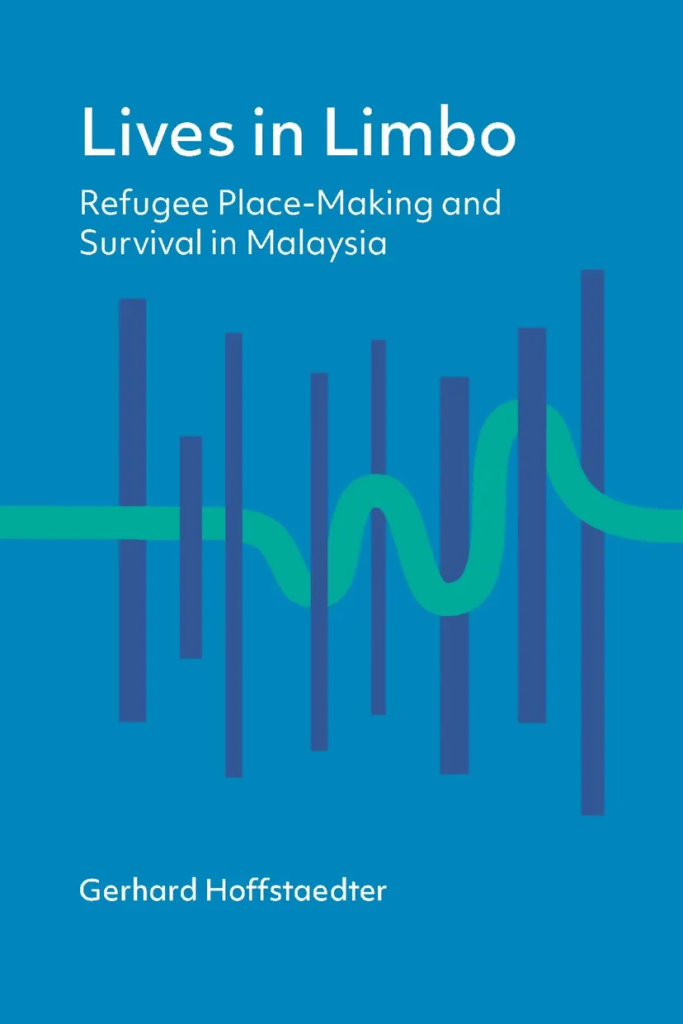
This week’s New Pubs features Hoffstaedter’s book on Rohingya and Chin refugees in Malaysia; Park on some rebel groups’ unexpectedly non-instrumental relationship with the formal economy; and Bagh et al on Myanmar’s emerging governance mosaic.
See our Recent Publications page for all of the citations and for past weeks, and if anyone wants a PDF but is excluded by pay wall, please email us and we will help if we can.
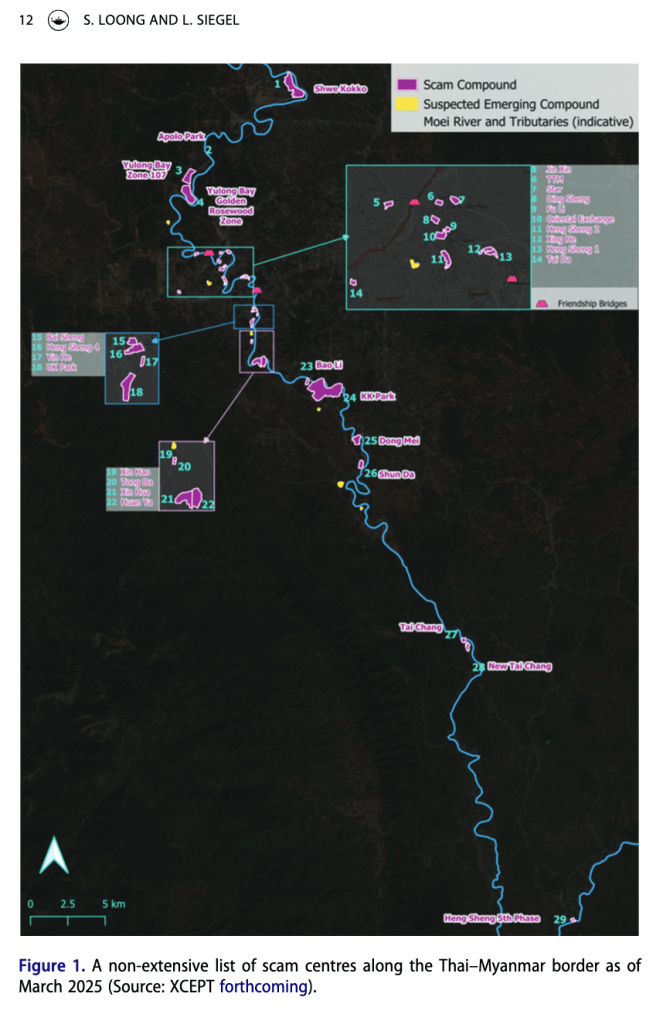
This week’s New Pubs focuses on the borders, featuring Loong and Siegel on scam centers in Myanmar’s civil war; Myat Htoo Razak and Cynthia Maung with lessons from the border on decolonizing health; and Proserpio on the rebuilding of Myanmar’s universities on the border.
See our Recent Publications page for all of the citations and for past weeks, and if anyone wants a PDF but is excluded by pay wall, please email us and we will help if we can.
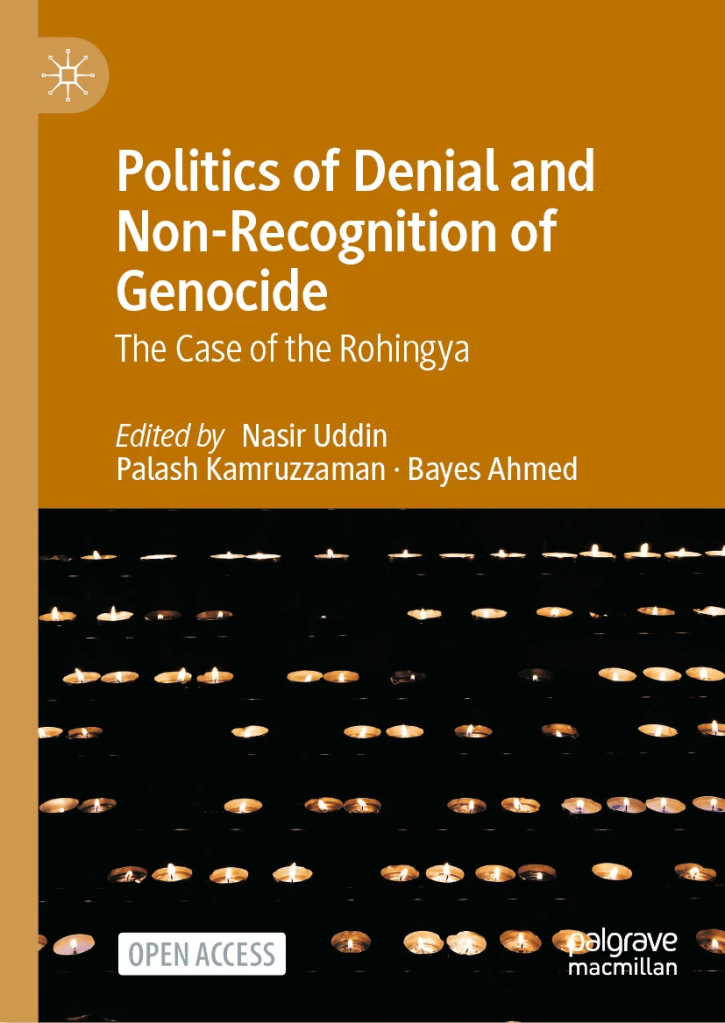
This week’s New Pubs features Uddin et al editing a book on the politics of denial of the Rohingya genocide; Pan Hsu Pyae Eain and Wells on students in the Myanmar revolution; Kawamoto on mastering abhinna in Hpa-Auk Buddhist Meditation in Myanmar.
See our Recent Publications page for all of the citations and for past weeks, and if anyone wants a PDF but is excluded by pay wall, please email us and we will help if we can.
Pan Hsu Pyae Eain and Tamas Wells. “Students and Revolution in Myanmar.” in Fox, Weiss, and Aspinall, eds. Youth Activism in Asia: A New Wave (2026): 84.
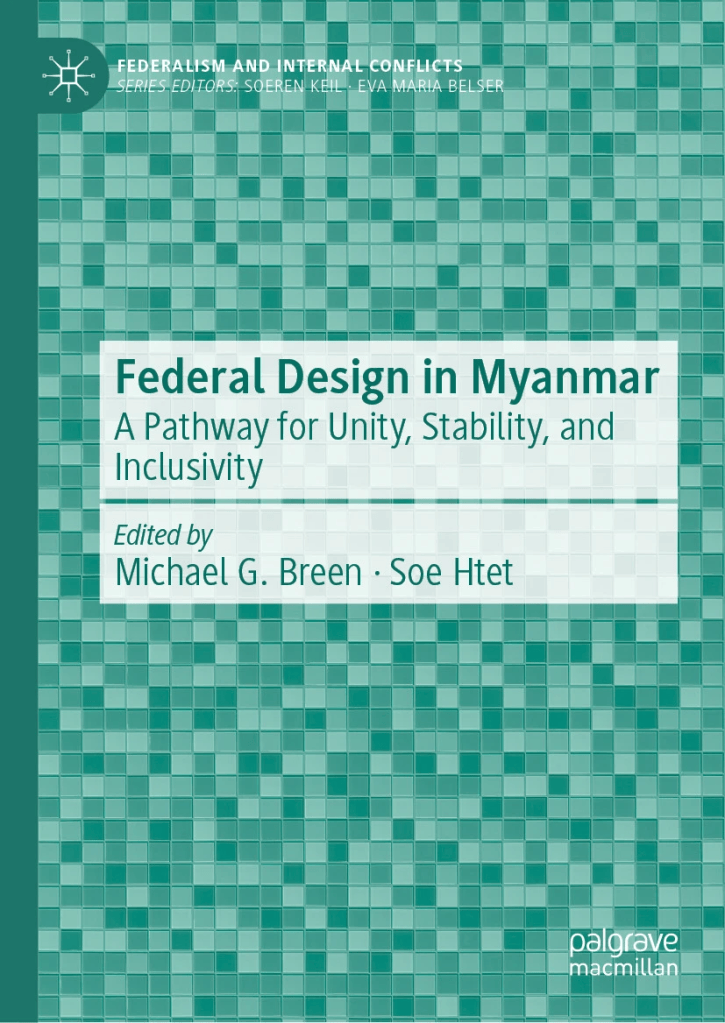
This week’s New Pubs features Breen and Soe Htet’s edited volume on federal design in Myanmar; Ma Cheria on labor violations in house-based garment factories in Mae Sot; and Saruya on learning Burmese to learn Buddhims.
See our Recent Publications page for all of the citations and for past weeks, and if anyone wants a PDF but is excluded by pay wall, please email us and we will help if we can.
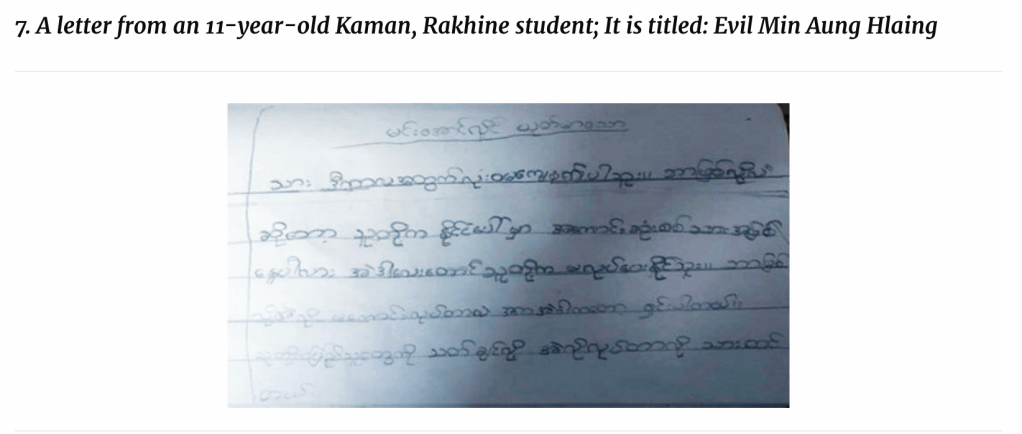
This week’s New Pubs features Ei Thin Zar and Otting on the teaching of civil disobedience through letters from Burma’s Gen Z; Deng on women’s religious labor vis-a-vis marble Buddha image polishing; and Sánchez Molano on ethno-religious boundaries in Myanmar and how people cross them.
See our Recent Publications page for all of the citations and for past weeks, and if anyone wants a PDF but is excluded by pay wall, please email us and we will help if we can.
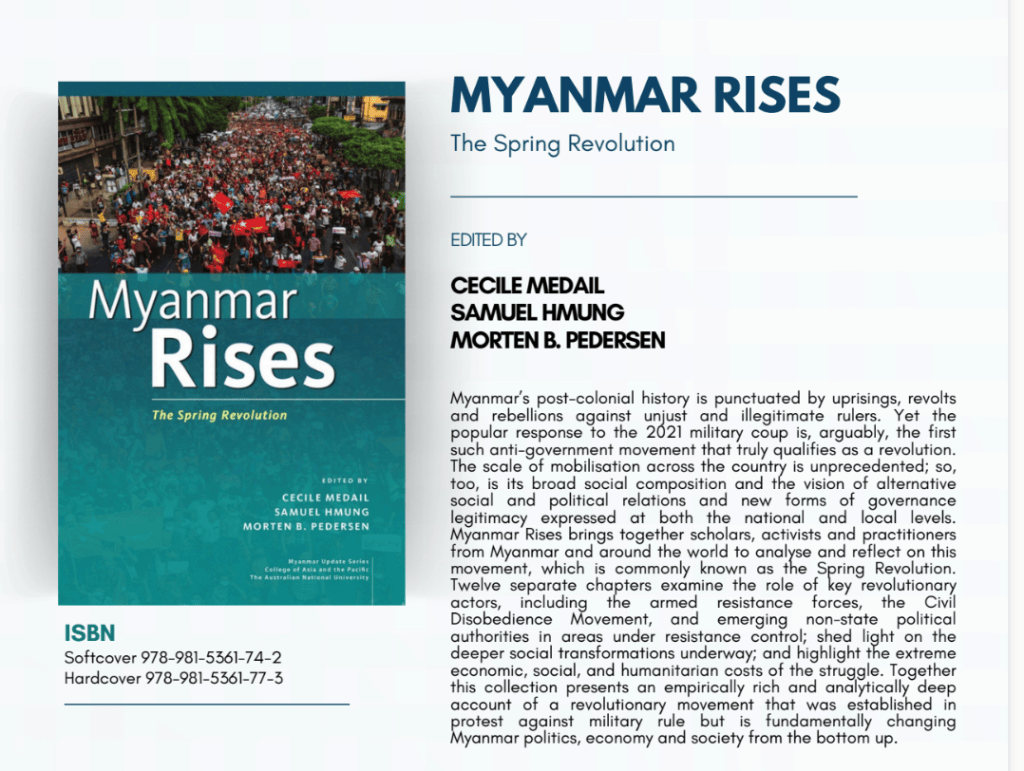
This week’s New Pubs features Medail et al eds of Myanmar Rises: the Spring Revolution; Neil and Saw Day Chit Htoo on reconsidering territoriality in rebel governance; and Ish and Bilay on Pyusawhti militias in central Myanmar.
See our Recent Publications page for all of the citations and for past weeks, and if anyone wants a PDF but is excluded by pay wall, please email us and we will help if we can.
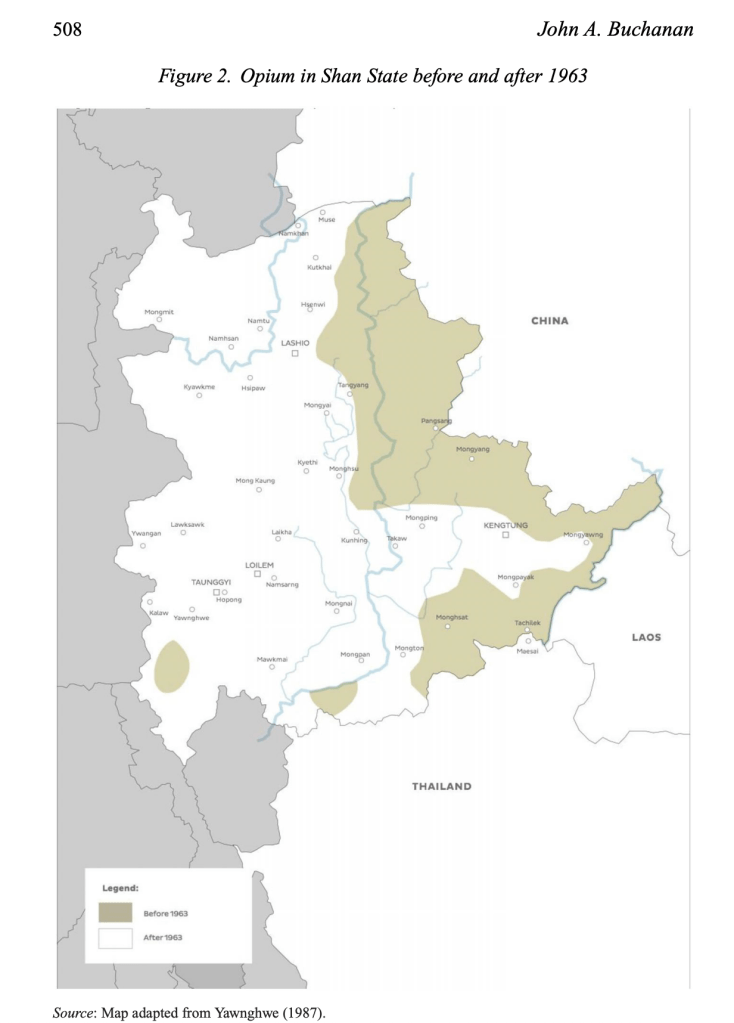
This week’s New Pubs features Buchanan on the challenges of moving opium through Shan State; Liljeblad on the prospects for federalism in Myanmar’s current conflict; and McCarthy and Nyana on the role of roadblocks in post-coup Myanmar.
See our Recent Publications page for all of the citations and for past weeks, and if anyone wants a PDF but is excluded by pay wall, please email us and we will help if we can.