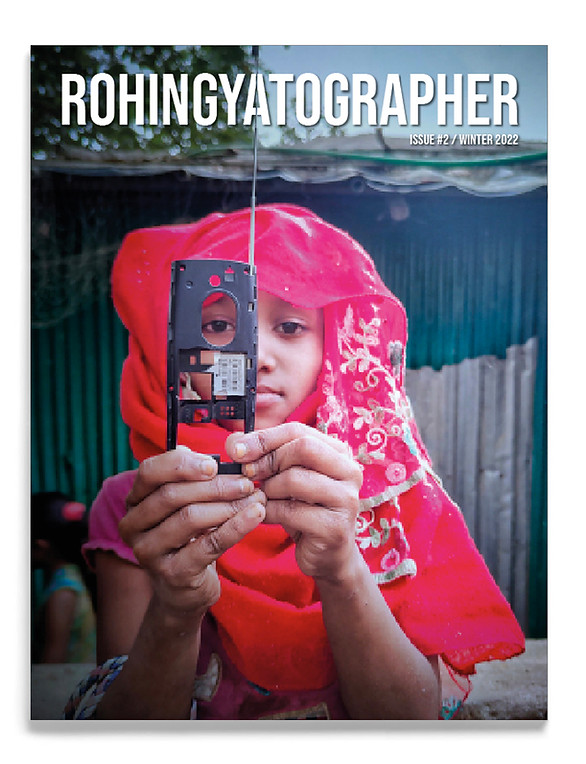
This week’s New Pubs features the second issue of Rohingyatographer, a magazine co-published by Rohingya photographers in CXB camps; Roewer and Han Htoo Khant Paing on Myanmar’s legislature; and Ware analyzing a Rohingya/Rakhine everyday peace program.
SOCIAL/JUSTICE in Southeast Asia Dissertation Proposal Workshop 7-8 April 2023 UW-Madison
The Justice in Southeast Lab (JSEALab) at UW-Madison will hold a two-day in-person workshop on dissertation proposal development. PhD students working on social justice, broadly-conceived, in Southeast Asia, who are developing their dissertation proposals are eligible to join. Each participant will share their draft proposal (approximately 3000 words) ahead of time and read and comment on proposals by other participants. Complementary events on writing CVs, translation, and writing for a public audience will be part of the workshop. Travel funds may be available for participants coming from outside Madison.
Professor Diana Kim (Georgetown University, author of award-winning Empires of Vice: The Rise of Opium Prohibition across Southeast Asia) will give a keynote address for the workshop.
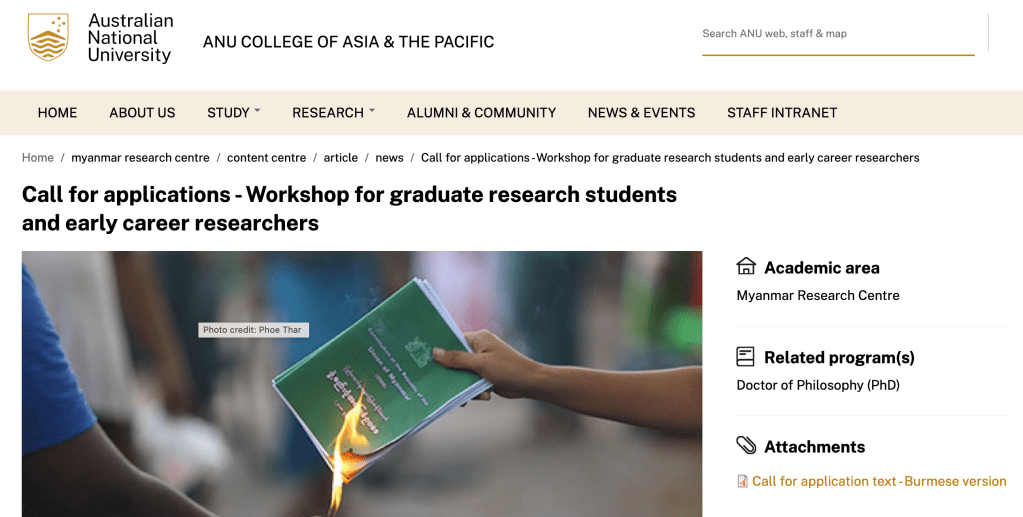
“This workshop will bring together early career researchers and PhD scholars of Myanmar to share experiences and lessons learned regarding fieldwork, methods, research, and writing since the February 2021 coup. The workshop will comprise of several panels over the course of one day, immediately prior to the ANU Myanmar Update conference on 21-22 July 2023. The sessions will address fieldwork and data generation, researching at a geographic distance, ethics, policy engagement, and new challenges for those wanting to speak, write and publish about Myanmar. The ANU Myanmar Research Centre will provide ongoing support to participants who are interested in submitting a paper to the working paper series or sharing their research as part of the MRC Dialogue Series.”
When: Thu, 20 Jul 2023
Where: The Australian National University, Canberra
Cost: Free
Deadline for expressions of interest is Friday 19 May 2023.
This week’s New Pubs features Scott on female ordination in Burma and the decline in debates about it; Bächtold on technologies and imaginaries about them in post-coup Myanmar; and a report by Researchers’ Republic and Visual Rebellion Myanmar on Myanmar pipelines after the coup.
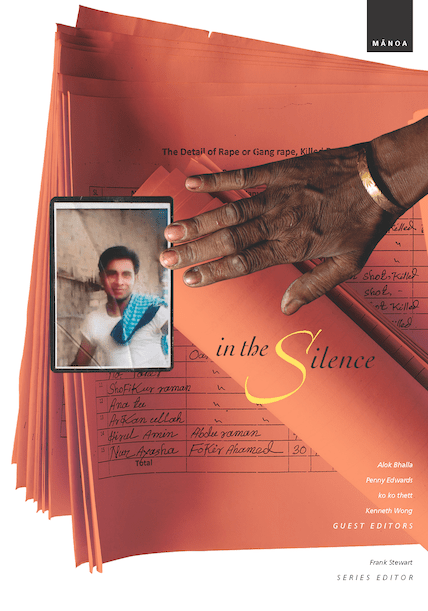
This week’s New Pubs is a bit different than usual. It only includes two texts, but they are both doozies: first, we feature a unique scholarly object – the website Yangon Stories – that visualizes and describes the violence of dispossession in Yangon over the years; second, we bring your attention to a special issue of Mānoa edited by several Burma studies scholars and artists (Penny Edwards, ko ko thett, Kenneth Wong), featuring the work of several Burmese poets and singers, including Aung Khin Myint, Thida Shania, Kyaw Zwa Moe, and Saw Phoe Kwar, and including Greg Constantine’s photography of the Rohingya genocide.
Australia Myanmar Institute is honoured by the readiness of Prof Sean Turnell to speak at this seminar. He is a member of AMI’s special advisory group and he has unequalled knowledge of the Myanmar economy and what will be needed to restore its vitality after two years of destruction by the military junta’s actions.
This week’s New Pubs features Wickaksana et al on Asean, Covid-19, and Myanmar’s crisis; Charney on Myanmar 75 years after independence; and Verma on India’s treatment of Rohingya amidst Covid-19.
A special lecture to mark 75 years of Myanmar’s independence & the complex history of its anti-colonial struggle, focusing on Aung San.
SPEAKER – Angelene Naw is Professor Emerita in History at Judson University (@JudsonU), Illinois. She is author of ‘Aung San and the Struggle for Burmese Independence’ (2001), an academic biography of Aung San, and very recently, of ‘The History of the Karen People of Burma’ (ed. J. Cain; 2023).
DISCUSSANT – Michael W. Charney is Professor in the Department of History & the Centre for International Studies and Diplomacy, SOAS(@SOAS), University of London, and a specialist in the history of Southeast Asia. He is author of ‘A History of Modern Burma’ (2009), and more recently, ‘Imperial Military Transportation in British Asia: Burma, 1941-1942’ (2019).
CHAIR – Dr Nilanjan Sarkar is Deputy Director, LSE South Asia Centre (@SAsiaLSE).
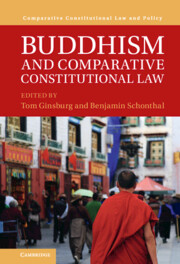
This week’s New Pubs features Frydenlund on Buddhist Constitutionalism through a comparative legal perspective; Joseph and Balakrishnan on the 1942 Burmese refugee exodus to India; and McKay and Frydenlund on the role of women in Myanmar’s right-wing Buddhist movement.



 Burma Studies Group