This week’s New Pubs features Campell’s review essay making sense of the “transition” and how it was problematic before it was foreclosed; Priamarizki on the development of the sit-tat; and Hedström and Herder on insights into women’s sexual and reproductive health gleaned from Myanmar.
This week’s New Pubs features Khin Thazin and Campbell on how Covid/ the coup have affected Burmese migrant workers in Singapore; Simpson et al on Myanmar’s arrested environmental activism; and Thako and Waters on Karen Mother-Tongue based education on the Thai-Burma border.
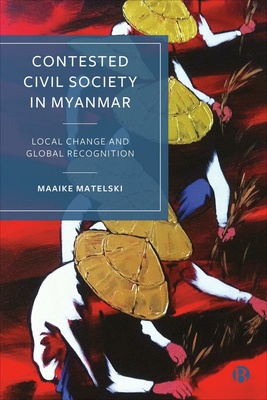
This week’s New Pubs features McCarthy’s book on non-state service provision from 1990 to the coup; a podcast on Fiskesjö’s 2021 book on the Wa, hosted by Cheesman; and Banki on transnational solidarity art vis-a-vis the Myanmar revolution.
Date/time: Tuesday 21 March 2023, 12.30–2.00pm, Room 2.54 (APCD Boardroom, Level 2) Hedley Bull Building ANU
Title:How Thai, and Burmese, torturers talk
Speaker: Nick Cheesman
Abstract: In 2021, a group of anti-narcotics cops in Nakhon Sawan, Thailand suffocated a man to death with plastic bags. The torture and killing would have gone unreported but that it was captured on a video, which a lawyer posted online. The video, in which the voices of the torturers are audible, serves as a starting point for this presentation. In it I revisit Elaine Scarry’s (1985) thesis that torture is not an element of interrogation, but the opposite: interrogation is internal to the structure of torture. In torture the captive’s ground becomes increasingly physical and the torturers’ increasingly verbal. That is to say, the political dynamic of violent degradation in torture is located not in how captives speak when tortured, but in how torturers themselves talk.
How do torturers talk? And how do answers to this question present opportunities for rethinking the relation between law, violence and political order? I address these questions by describing research on torture in Thailand conducted during 2018-19 and 2022, supplemented by data from Myanmar prior to the 2021 coup there. I argue that in Thailand and Myanmar, torturers’ talk works not to elicit facts but establish subject positions. It is pedagogical, not epistemological, concerned not with the production of knowledge but with the affirmation of the rightness of torturers’ views and practices. What is at stake is not the truthfulness of captives’ answers, but their demonstrated ability to learn and perform assigned roles in the torture situation. The task for politically engaged research on torture, among other categories of state violence, is to describe and understand the part that such pedagogies of torment play in arrangements for the domination of some people by others.
This week’s New Pubs features Norén-Nilsson on civil society leadership in Southeast Asia; Banerjee on India’s connectivity projects with Myanmar after the coup; and Egreteau on the “widening of the revolutionary whirlwind.”
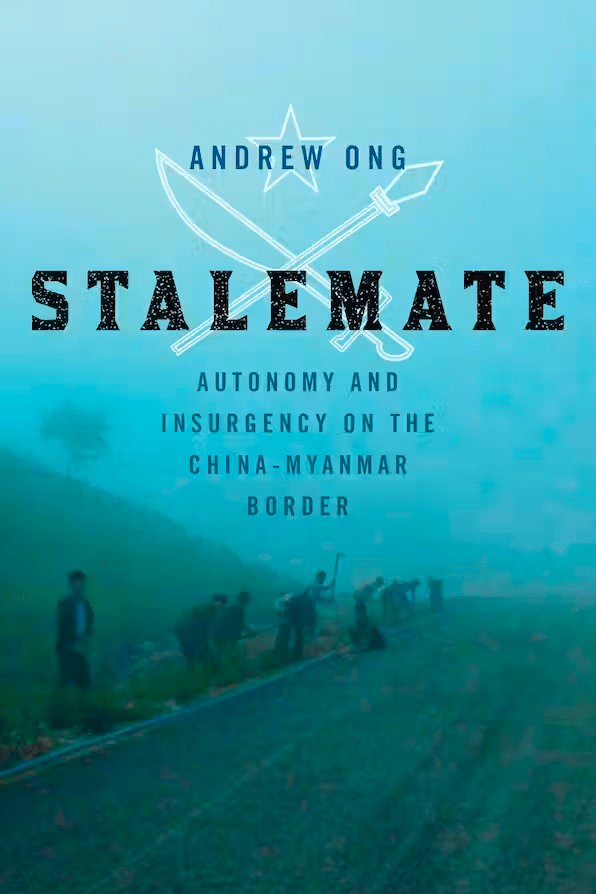
Stalemate reveals the history and contemporary politics of the United Wa State Army (UWSA), Asia’s strongest insurgent army on Myanmar’s border with China. This ethnographic tale recounts how a highland group, often dismissed as rebels or narcotraffickers, maintains a relational autonomy between two powerful lowland states. The Wa polity engages rather than evades these surrounding states, yet struggles to fit into their registers of sovereignty and statehood.
Please see the following opportunity for a fluent Burmese speaker/writer to join the Independent Journal of Burmese Scholarship: https://forms.gle/LAyUbxMkF7LJENuS7.