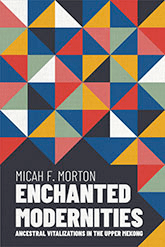
This week’s New Pubs features Morton’s book on the region’s pan-Akha identity and ethnic network; South on the “post-Myanmar turn” away from state-centric solutions; and Roewer on how the EU should increase support for Myanmar’s resistance.
See our Recent Publications page for all of the citations and for past weeks, and if anyone wants a PDF but is excluded by pay wall, please email us and we will help if we can.
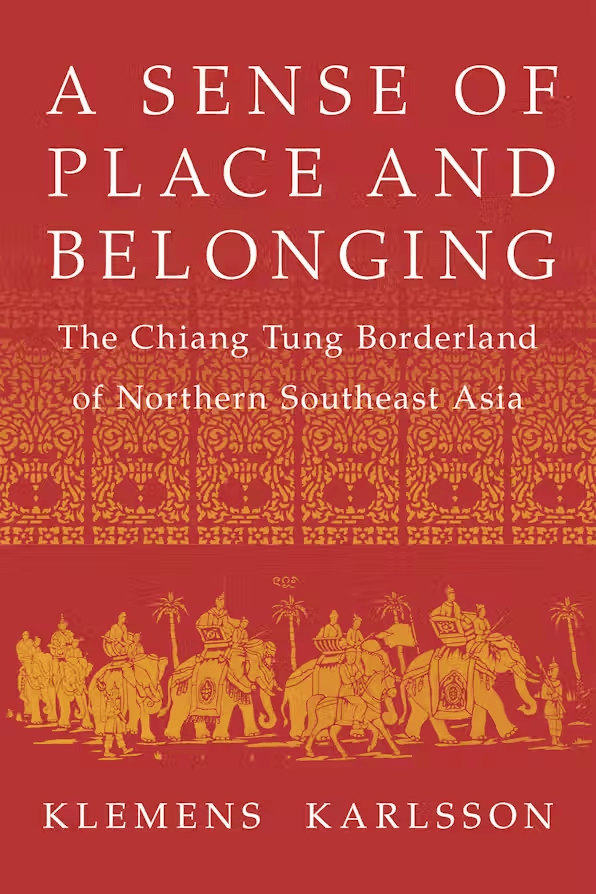
This week’s New Pubs features Karlsson’s book on Chiang Tung borderlands; You and Zhang on how infrastructure on the China-Myanmar border affects migration; and Kolås on Rohingya identity, nationhood, and the census.
See our Recent Publications page for all of the citations and for past weeks, and if anyone wants a PDF but is excluded by pay wall, please email us and we will help if we can.
Damage control: Myanmar’s earthquake and ongoing conflict
MRC Dialogue Series 2025 Date: Tuesday 15 April 2025 Time zone: 5.30–6.30pm AEST, 2-3pm MMT, 9.30-10.30am CEST Zoom – register here
photo: IRC
On 28 March, a devastating 7.7 magnitude earthquake struck Myanmar. Its epicentre was in Sagaing Region and it was followed by multiple powerful aftershocks. Thousands have died and thousands more buildings and infrastructure have been destroyed in what is now recognised as the biggest and most consequential earthquake in Myanmar for more than a century. The worst damage and highest death toll appear to be in Sagaing and Mandalay regions, two areas with strong revolutionary spirit, ongoing armed conflict, near-daily air strikes in civilian areas, and intractable political violence.
The alternative National Unity Government (NUG) and several ethnic armed groups declared temporary ceasefires to allow for quake relief efforts, followed by a ceasefire announcement from the military a few days later—however, air strikes and clashes have continued. Many nations, including neighboring giants China and India, have now sent aid and rescue teams into Myanmar in cooperation with the military dictatorship, and many more countries and groups have pledged humanitarian assistance through international agencies. Lasting ceasefires have followed other natural disasters and humanitarian efforts in the region, such as the devastating tsunami in Aceh, Indonesia. But they can equally do the opposite, such as in Sri Lanka, when a ceasefire broke down after the same tsunami. In military-ruled Myanmar, recent disasters such as Cyclone Nargis have only served the military’s purposes to retain control and weaponize aid.
Will the 2025 temporary ceasefires in the wake of the earthquake lead to opportunities for long-term peace, and serve as a catalyst for political change? Or will they only exacerbate and further complicate the ongoing conflict?
In this seminar, Su Mon Thant argues that the ceasefires are unlikely to de-escalate conflict, let alone create pathways to peace. In fact, other nations’ disaster relief efforts in the country could even strengthen the junta’s international legitimacy, potentially prolonging conflict with the myriad groups and millions of people that still reject military rule in Myanmar and resist the illegal and illegitimate 2021 military coup.
Speaker: Su Mon Thant is an expert in conflict dynamics and democracy in Asia. She works as an Asia-Pacific Senior Analyst for the international organisation Armed Conflict Location and Event Data (ACLED) where she has worked since 2021. She holds an MA in Politics and International Relations from Keele University (UK) and has researched Myanmar’s politics and society for over a decade, including as an accredited observer of the 2015 and 2020 Myanmar elections. She is currently a Myanmar-Australia Visiting Fellow, supported by the University of Melbourne Myanmar Research Network and the ANU Myanmar Research Centre. Her fellowship is also partly supported by the University of Melbourne’s Initiative for Peacebuilding. Chair: Zaw Yadanar Hein
This week’s New Pubs features Lintner’s new book on the coup; Selth on how Myanmar developed its intelligence state; and Takeda on the Kachin Women’s Association of Thailand.
See our Recent Publications page for all of the citations and for past weeks, and if anyone wants a PDF but is excluded by pay wall, please email us and we will help if we can.
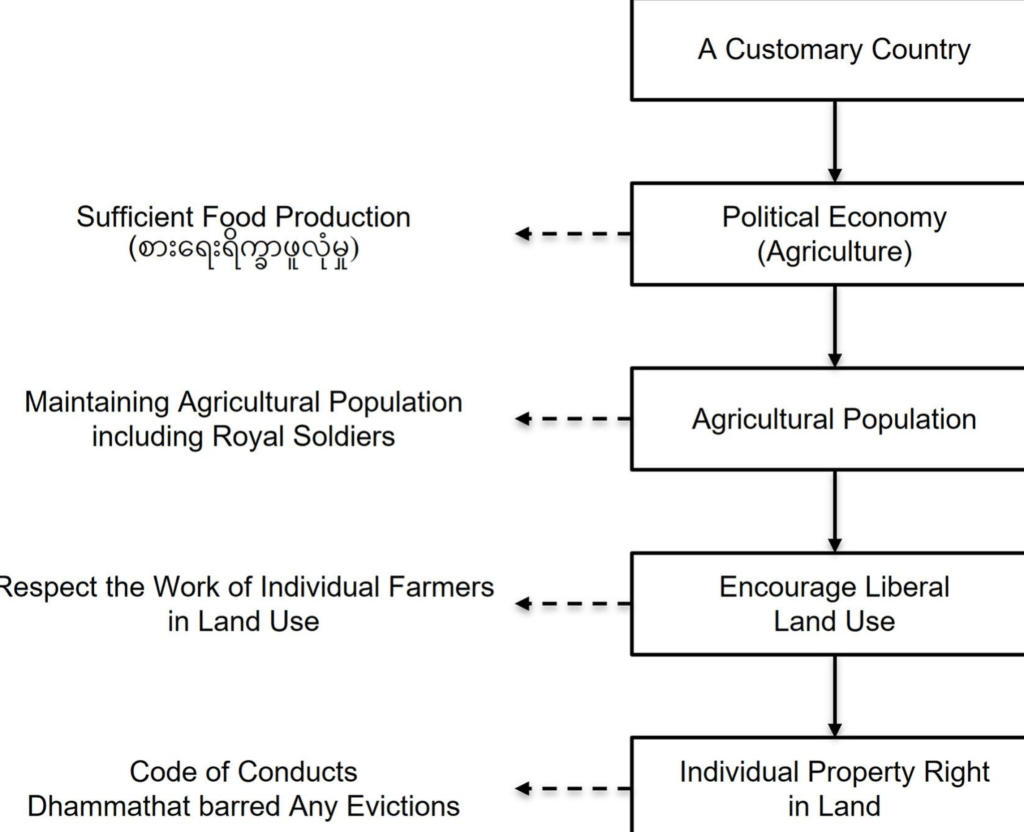
This week’s New Pubs features Phyu Phyu Han et al examining the people-land nexus from the Konbaung to British eras; Décobert and Wells on intermediary humanitarian actors in time of Myanmar’s crisis; and Chophy on how protestant missions transformed the Indo-Myanmar frontier.
See our Recent Publications page for all of the citations and for past weeks, and if anyone wants a PDF but is excluded by pay wall, please email us and we will help if we can.
Tracking the civil war: What to expect in 2025? (Keynote of the Forum) Morgan Michaels, International Institute for Strategic Studies (IISS)
Myanmar’s post-coup crisis in numbers Su Mon Thant, Armed Conflict Location and Event Data (ACLED)
The upcoming elections: Do they matter? Michael Lidauer, independent researcher
The Federal Democracy Charter: Viable pathway to peace? Michael Breen and Soe Htet, University of Melbourne
Panel on rebel governance Zaw Tuseng, Director, Myanmar Policy Institute, New York; Su Mon Thazin Aung, Visiting Fellow, Myanmar Studies Programme, ISEAS–Yusuf Ishak Institute, Singapore; James Davies, independent analyst; and Tony Neil, London School of Economics
Are you a Myanmar researcher looking to design a new research project? Or are you developing a research proposal to apply for a PhD? The Myanmar Research Network at University of Melbourne in collaboration with the Myanmar Research Centre at Australian National University (ANU) – and with support of the Australian Department of Foreign Affairs and Trade – invite expressions of interest for Myanmar researchers to join an online social science research skills program in May-June 2025. The program will involve three online workshops and individual mentoring sessions aimed at supporting participants to develop a research proposal fora long term research project. This could, for example, be used for applying for research funding or for a university PhD program.
To be eligible you must: -Be a researcher of Myanmar nationality -Have a postgraduate research qualification in social sciences (e.g., Masters’ degree with research thesis component, or a coursework Masters’ degree with other experience comparable to a research thesis). -Be able to demonstrate research interests and experience in social sciences eg politics, policy, anthropology, development studies. (Expressions of interest in other fields such as medicine, law, agriculture etc will not be considered). -Have plans to conduct a long term social science research project (eg PhD) -Have high-level spoken and written English
Expectations of participants
Participants will be expected to:
-Attend all workshops and mentoring sessions -Produce an English language research project proposal – this will be short, for example 4-5 pages -Present the research proposal to the participant group Intended outcomes
The program is designed to support researchers: -To develop relevant, clear and feasible research proposals -To develop analytical skills in research design -To meet other Myanmar social science researchers who have similar goals
This week’s New Pubs features Aung exploring “the principle contradiction between insurgency and autonomy” in the revolution; Lutfa and Shanto on the Arakan Army’s relation to Myanmar’s ethnic politics; and a book by Jacobs on Anglo-Burmese history and culture.
See our Recent Publications page for all of the citations and for past weeks, and if anyone wants a PDF but is excluded by pay wall, please email us and we will help if we can.
Conflict-related sexual violence in Myanmar: The role of the state
Date: Tuesday 25 March 2025 Time zone: 5.30–6.30pm AEDT, 1–2pm MMT, 8.30-9.30am CEST zoom here
Abstract
The prevention of Conflict-related Sexual Violence (CRSV) often relies on states to lead prevention and response mechanisms at the domestic level. However, state actors, such as the military, are frequently responsible for this violence. Can states play an effective role in preventing and responding to CRSV? This presentation, drawing from a forthcoming book, provides a deeper understanding of the state’s role as a prevention actor and explains why strategies aimed at preventing CRSV often fail and can sometimes even result in more harm.
Myanmar is a politically complex state that has experienced several decades of armed conflict, persistent military regimes, and a high prevalence of CRSV incidents committed by the state armed forces, the Tatmadaw. The book, Conflict-Related Sexual Violence in Myanmar: The Role of the State, offers unique insights into CRSV prevention efforts in Myanmar, tracing the implementation process of the Joint Communiqué (JC), an agreement signed between the Myanmar government and the United Nations to effectively prevent and respond to CRSV.
The book is based on a comprehensive qualitative analysis of internal and public documents, and interviews with multiple stakeholders over a two-year period. It reveals how the gendered power structure and formal and informal practices of Myanmar’s state institutions constantly impeded the implementation process of the JC and offered a very limited political opportunity structure for local women’s civil society organisations (CSOs) to be involved in the JC implementation. A significant portion of the data in this study was collected in 2021 following the military coup in Myanmar. The author describes her experiences as a local researcher in solidarity with the local research participants experiencing the brutality of the military crackdown and conducting data collection in a particularly challenging context.
Dr Phyu Phyu Oo is a Research Fellow at the ARC Centre of Excellence for the Elimination of Violence Against Women (CEVAW) at Griffith University. She holds a Master of Public Health from Johns Hopkins University and a PhD in International Relations from Griffith University. Her research focuses on addressing critical issues related to sexual and gender-based violence in conflict and other crises. With over a decade of experience as a practitioner in development and humanitarian settings across the Asia-Pacific region, she brings both academic expertise and practical insight to her work. Dr Oo was awarded a Fulbright Scholarship in 2014 and a Griffith Postgraduate Scholarship in 2019. Her forthcoming book, Conflict-Related Sexual Violence in Myanmar: The Role of the State, was recognised with the John Legge Thesis Prize for the best thesis in Asian Studies by the Asian Studies Association of Australia.
This week’s New Pubs features Holliday et al on post-coup humanitarian engagement by both ‘regional’ and ‘international’ actors; Russell and Gaborit on gender and the post-coup reconsideration of how hpon can be polluted; and an edited volume on youth, community, and democracy with eight chapters on Myanmar.
See our Recent Publications page for all of the citations and for past weeks, and if anyone wants a PDF but is excluded by pay wall, please email us and we will help if we can.



 Burma Studies Group