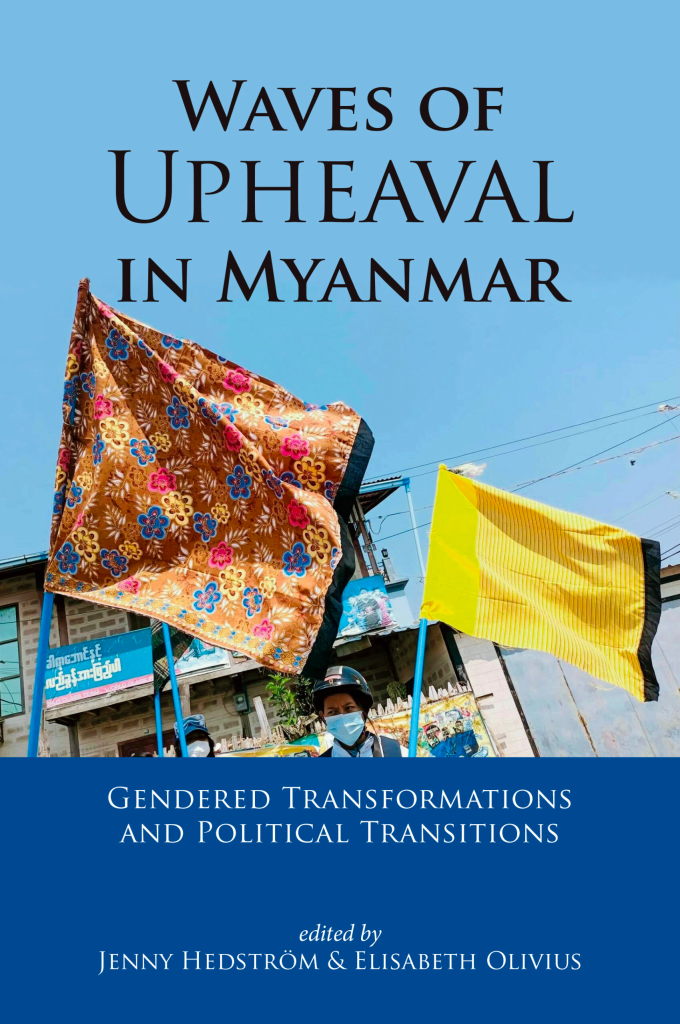
This week in New Pubs we feature several reflections on civil society and activism. Wells writes about the way the NLD depoliticized urban issues; Curley and McCarthy on the way civil society is governed; and Garnett on environmental activism in Myanmar.
The Inya Institute is pleased to announce its inaugural language course series on three prominent languages spoken in Myanmar: (1) Kachin – Jinghpaw; (2) Karen – S’gaw; and (3) Shan – Tai long.
The two-week language course will equip participants with the essential skills needed to communicate confidently and effectively in one of the three languages in a broad range of situations. Our three teams of language teachers were trained by the University of Wisconsin-Madison’s SEASSI current Burmese language instructor. No prior knowledge of these languages is required. The language course is open to undergraduate, graduate, postgraduate students, professionals, researchers, and NGO workers of any nationality, wherever they are based in Myanmar, Southeast Asia or the U.S. The language of instruction will be English.
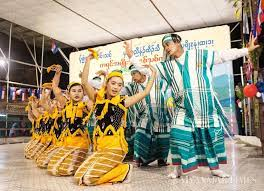
I’m particularly proud of this one, as it comes from a now-defunct but much-loved weekly journal published by our hard working friends at Pansodan Art Gallery between 2013 and 2014 (or thereabouts). Called Pansodan Arts and CultureFriday Journal, it featured ruminations on Myanmar society in both Burmese and English. We feature a dispatch by anthropologist Felix Girke on the much-maligned National Races Village in Thaketa. He finds, pace the conventional foreigner wisdom that the place is full of only lies and stereotypes, “more than meets the eye.”
This year’s AAS will be held March 16-19, 2023 in Boston, Massachusetts at the Hynes Convention Center and the Boston Sheraton Hotel. see here for more details.
Editor’s notes:
Keep in mind that AAS almost never accepts individual paper proposals, so you need to organize a panel.
The BSG has appointed an ad-hoc committee to choose a representative panel for the BSG. Stay tuned for details from BSG on how / when to submit your proposals.
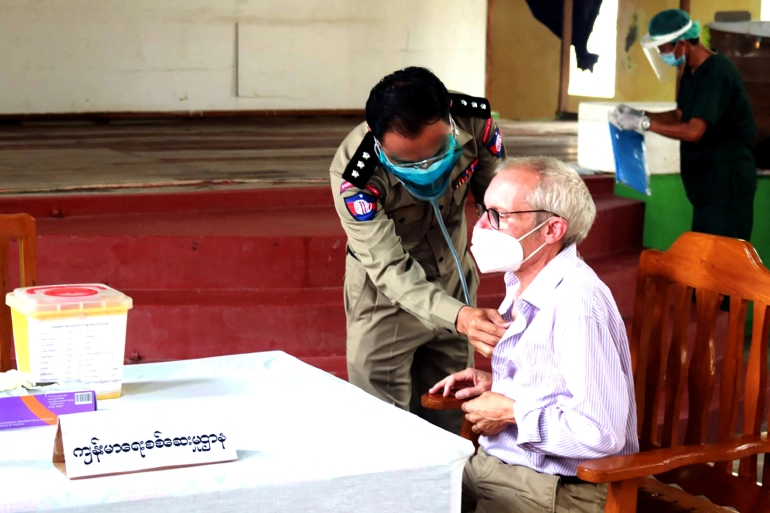
This week in New Pubs, in addition to the new issue of JoBS that just dropped, we have Alam and Wood on implicit authorization of mass violence (vis-a-vis the Rohingya in Myanmar); Phyu Phyu Oo and Davies on gender based violence in northern Shan State and victim-centered justice mechanisms; finally, Passeri on the way authoritarian rule in Myanmar has impacted natural disaster response, from Nargis to Covid.
Journal of Burma Studies‘ first issue of 2022 is hot off presses. It’s articles are:
Saruya, Rachelle. “Ritual and Play in Buddhist Nun-Making: Girlhood, Nunhood, and the Shaping of the ‘Little Teacher’ in Today’s Myanmar.” pp. 1-33
Thanapas Dejpawuttikul. “From Archenemy of the Nation to the Intimate Other: Prince Damrong Rajanubhab’s Journey through Burma and the Colonial Ecumene” pp. 35-67
Reny, Marie-Eve. “Military Rule with a Weak Army: Myanmar’s Late Expansion.”pp. 69-93
Matelski, Maaike and Nang Muay Noan. “Grassroots Roles and Leadership Aspirations: The Experiences of Young Ethnic Women in Myanmar Civil Society Organizations.” pp. 95-131
Also book reviews by Jane Ferguson, Linda McIntosh, and Yuri Takahashi.
Continuing from last week’s Cuts, we proceed with our on-going examination of education in Burma, with two more texts. Cheesman, better known for his work on law in Myanmar, also has a Master’s Thesis on Myanmar educational curricula, where he looks “into the texture of text: its style, form, organisation, history and context, and not merely its contents” (2002:112). Then we have Brooke Treadwell’s 2013 dissertation that attends to how such texts are actually transmitted (by teachers) and received (by students). Her ethnography reveals, perhaps not surprisingly, that the state’s ideology was not transmitted through pliant mediators to docile recipients (see ch 5 and end of ch 4).
This week in New Pubs we have a short piece by Takahashi on metal musical instruments in Myanmar; Khin Thazin and Campbell on how the coup has impacted Myanmar migrant workers abroad; and a new edited volume by Hussain on encamped Rohingya life.
In this week’s Deep Cuts we have the first of a two-part series featuring analyses of Burma’s education system through the years. The first is Salem-Gervais and Metro’s examination of the changes in Myanmar’s school curricula from the BSPP period through the SPDC one. What is shocking is the amount of pruning of content on non-Bamar peoples. At one point the authors ask, acidly, “Since the national races are portrayed as being completely unified politically, one may begin to wonder what differentiates them at all” (2012:52).” Myo Oo compares two specific textbooks during the independence period, an era which he argues is understudied. He finds an apparent contradiction: the history book analyzed asserts that many ethnicities consolidated into a homogenous population in Myanmar; the civics book, by contrast, articulates liberal principles of governance that displace the importance of national identity.
This week in New Pubs we have Luong featuring voices of opium farmers; Pederson on how the coup has rent Myanmar apart; and Ye Myo Hein on the revolution’s အရှိန်အဟုန်