This week’s New Pubs features Kathu Than Aung on Myanmar’s Taingyintha literature and writing systems [Burmese]; Rahman and Dutta on how the UN Card affects Rohingya health access in Malaysia; and Stokke on civil society and contentious politics in Myanmar.
Postdoctoral Fellowship in Myanmar Studies at the University of British Columbia
The Institute of Asian Research in the School of Public Policy and Global Affairs at the University of British Columbia (UBC) welcomes applicants for a postdoctoral fellowship in Myanmar Studies. The fellowship is enabled by a grant from the International Development Research Centre (IDRC) Knowledge for Democracy Myanmar initiative. The successful candidate will show promise as an emerging scholar of contemporary Myanmar, and have an active research agenda that engages contemporary social, political, or economic issues related to democratization and peace.
The duration of the fellowship is between 16 and 24 months, subject to agreement with the committee. The start date is flexible, but should not be after September 1, 2023. The successful candidate must have completed a PhD within the last 5 years, or expect to complete one shortly, in a relevant discipline (e.g. anthropology, economics, political science, sociology, history, or any other social science or humanities discipline). The postdoctoral fellow is expected to conduct research on contemporary Burma/Myanmar, as well as support the UBC Myanmar initiative and its activities, including mentoring Burmese students at the UBC, and engaging with the Burma Studies communities in Canada, Asia, and globally. Candidates from or connected to Myanmar are especially encouraged to apply.
The application deadline is March 10, 2023. The review of applications will begin immediately following the deadline.
Applications can be sent to Dr. Kai Ostwald, Director of the Institute of Asian Research, SPPGA, c/o Yoko Nagao (yoko.nagao@ubc.ca). They must include the following:
A cover letter that includes a description of current and proposed research;
a curriculum vitae;
proof of Ph.D. completion prior to the start date;
two letters of reference, to be sent directly by referees to yoko.nagao@ubc.ca
How to apply?
Applicants should send materials by email, as described above, referencing Myanmar Studies PD Fellow.
Desired start date: Not later than September 01, 2023
Insight Myanmar presents its third panel discussion, dealing with the way that Myanmar’s ongoing revolution has been attended to (or not) by those outside the country.
· Michael Haack, Campaign Manager for Campaign for a New Myanmar, and member of the U.S. Advocacy Coalition. Michael has been closely involved in a number of important, Myanmar-related issues, as both a researcher and lobbyist.
· Philipp Annawitt, a governance specialist, political analyst and experienced project management professional who has been advising development partners in their engagement with the NUG and CRPH. Philipp has researched the historic concept and definition of “legitimacy” and argues that the NUG should meet any basic criteria.
· Nandar Min Swe, a Los Angeles-based doctor who became one of the main fundraisers for humanitarian aid, and has also led various NUG fundraising projects.
· Igor Blaževič, a senior adviser at the Prague Civil Society Centre. Between 2011 and 2016 he worked in Myanmar as the head lecturer of the Educational Initiatives Program. Following the coup, Igor has come on as a fulltime advisor and supporter of the Spring Revolution.
· Thiri, a researcher, fixer and documentary producer based in Myanmar. Thiri has worked as a freelance consultant for international Human Rights organizations and media outlets. She reports, documents and advocates about the on-going conflict in Myanmar, as well as on political, social and economic issues.
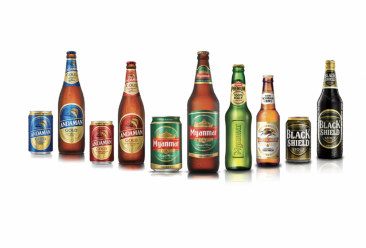
This week’s New Pubs features Pau on mapping the India-Myanmar borderlands; Lehr on “enraged Buddhism” in Myanmar; and Horsey and Kean on the political economy of Burma’s beer industry.
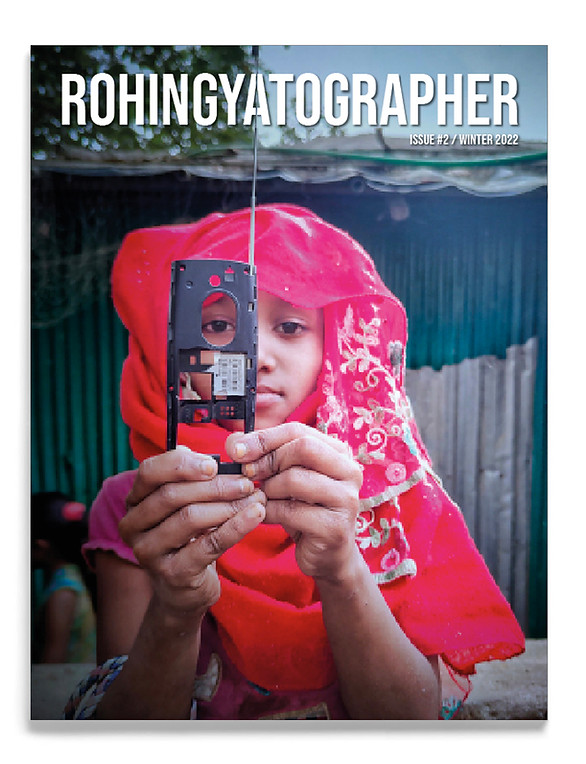
This week’s New Pubs features the second issue of Rohingyatographer, a magazine co-published by Rohingya photographers in CXB camps; Roewer and Han Htoo Khant Paing on Myanmar’s legislature; and Ware analyzing a Rohingya/Rakhine everyday peace program.
SOCIAL/JUSTICE in Southeast Asia Dissertation Proposal Workshop 7-8 April 2023 UW-Madison
The Justice in Southeast Lab (JSEALab) at UW-Madison will hold a two-day in-person workshop on dissertation proposal development. PhD students working on social justice, broadly-conceived, in Southeast Asia, who are developing their dissertation proposals are eligible to join. Each participant will share their draft proposal (approximately 3000 words) ahead of time and read and comment on proposals by other participants. Complementary events on writing CVs, translation, and writing for a public audience will be part of the workshop. Travel funds may be available for participants coming from outside Madison.
Professor Diana Kim (Georgetown University, author of award-winning Empires of Vice: The Rise of Opium Prohibition across Southeast Asia) will give a keynote address for the workshop.
“This workshop will bring together early career researchers and PhD scholars of Myanmar to share experiences and lessons learned regarding fieldwork, methods, research, and writing since the February 2021 coup. The workshop will comprise of several panels over the course of one day, immediately prior to the ANU Myanmar Update conference on 21-22 July 2023. The sessions will address fieldwork and data generation, researching at a geographic distance, ethics, policy engagement, and new challenges for those wanting to speak, write and publish about Myanmar. The ANU Myanmar Research Centre will provide ongoing support to participants who are interested in submitting a paper to the working paper series or sharing their research as part of the MRC Dialogue Series.”
When: Thu, 20 Jul 2023
Where: The Australian National University, Canberra
Cost: Free
Deadline for expressions of interest is Friday 19 May 2023.
This week’s New Pubs features Scott on female ordination in Burma and the decline in debates about it; Bächtold on technologies and imaginaries about them in post-coup Myanmar; and a report by Researchers’ Republic and Visual Rebellion Myanmar on Myanmar pipelines after the coup.
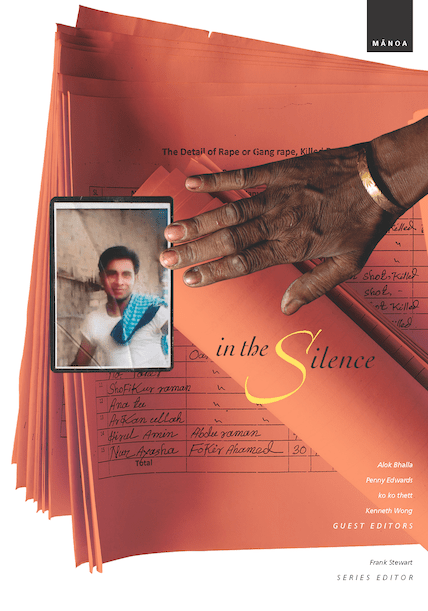
This week’s New Pubs is a bit different than usual. It only includes two texts, but they are both doozies: first, we feature a unique scholarly object – the website Yangon Stories – that visualizes and describes the violence of dispossession in Yangon over the years; second, we bring your attention to a special issue of Mānoa edited by several Burma studies scholars and artists (Penny Edwards, ko ko thett, Kenneth Wong), featuring the work of several Burmese poets and singers, including Aung Khin Myint, Thida Shania, Kyaw Zwa Moe, and Saw Phoe Kwar, and including Greg Constantine’s photography of the Rohingya genocide.
Australia Myanmar Institute is honoured by the readiness of Prof Sean Turnell to speak at this seminar. He is a member of AMI’s special advisory group and he has unequalled knowledge of the Myanmar economy and what will be needed to restore its vitality after two years of destruction by the military junta’s actions.