In this wide-ranging interview with Aurore Candier, the new director of the Burma Studies Center of NIU (and accompanied in this conversation by the out-going director, Catherine Raymond), the discussion touches on everything from evolutions in Burmese language, to histories of divination, to how to study Myanmar.
Recent literature on the political economy of education emphasizes indoctrination as the primary motivation behind education expansion under non-democratic states. However, existing literature fails to explain a paradoxical consequence of state-led education: the emergence of educated youth as a force of resistance against non-democratic rule. Modeling the strategic interaction between educated youth and government under changing economic situations, I argue that education through indoctrination only works when loyalty to the state continues to generate economic advantage in a low-development context. Therefore, education’s potential for indoctrination weakens as education access expands and economic returns to education decline. I evaluate this theory in the context of Myanmar after the 2021 military coup. Using novel panel data on economic development and access to education at the township level, I show that, while education levels are negatively associated with the number of resistance events, the relationship is significantly weaker in townships that experienced strong economic growth after the emergence of civilian-military government in 2010. The findings yield new insights into the dynamics of state consolidation through education in developing economies.
About the Speaker
Dr. Htet Thiha Zaw is a Postdoctoral Fellow at the School of Public Policy and Global Affairs, University of British Columbia. He studies how institutions created and maintained by indigenous societies have shaped historical state development in the Global South, with a regional focus on Southeast Asia. His research demonstrates that indigenous political and social institutions—many of which predate colonial rule—are crucial to understanding how colonial elites constructed state institutions, from allocating infrastructure and exercising coercive power to replacing indigenous schools with state-controlled education systems. He supports his arguments with empirical evidence drawn from original data in pre-colonial and colonial records, integrating quantitative analyses of cross-section, panel, geospatial, and text-as-data with qualitative insights from archival research. His research has been published or is forthcoming in Comparative Political Studies, Comparative Education Review, and the International Journal of Educational Development, among other venues.
This week’s New Pubs features Chambers on religious institution building as a form of state territorialization in southeastern Myanmar; Lucassen on xenophobia in labor migration within colonial Burma; and Waters exposing how American officials’ memoirs leave the CIA out of U.S. policy in Burma.
See our Recent Publications page for all of the citations and for past weeks, and if anyone wants a PDF but is excluded by pay wall, please email us and we will help if we can.
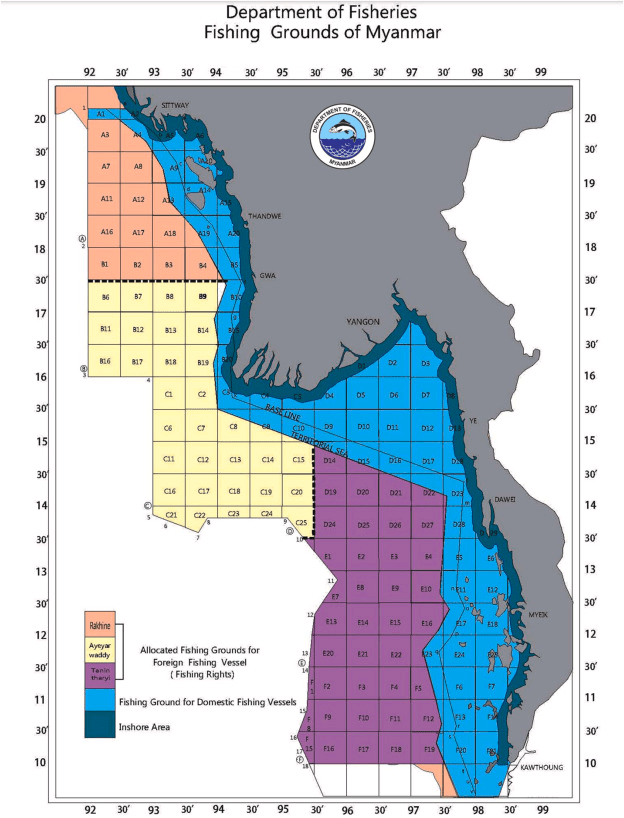
This week’s New Pubs features Chu et al on business practices of a Chinese-owned SOE in Kyaukphyu; Nyi Nyi Kyaw on Myanmar’s Spring Revolution leadership deficit; and Eaindra T.T.T. and Middleton on enclosure of fisheries in the Gulf of Mottoma.
See our Recent Publications page for all of the citations and for past weeks, and if anyone wants a PDF but is excluded by pay wall, please email us and we will help if we can.
This week’s New Pubs features Mon Mon Myat assessing Myanmar Egress; Smith on tourism in Myanmar as a form of extraction; and Passeri on Myanmar’s post-coup foreign policy.
See our Recent Publications page for all of the citations and for past weeks, and if anyone wants a PDF but is excluded by pay wall, please email us and we will help if we can.
This week’s New Pubs features Wittekind on speculation as subsistence in peri-urban Myanmar; Selth on Myanmar’s authoritarian intelligence apparatus; and Wu on Burmese exiles on the Thai border during this revolutionary era.
See our Recent Publications page for all of the citations and for past weeks, and if anyone wants a PDF but is excluded by pay wall, please email us and we will help if we can.
This week’s New Pubs features Thein-Lemelson on contestations over the memory of political imprisonment in Myanmar; Faxon et al trace a “feminist counter-topography” of Myanmar’s wars; and Sengupta on activism, law, and Rohingya life in Bangladesh camps.
See our Recent Publications page for all of the citations and for past weeks, and if anyone wants a PDF but is excluded by pay wall, please email us and we will help if we can.