This week’s New Pubs features Rhoads on statutory weakening and bureaucracy hinder the implementation of legal pluralism in Burma; Heiduk on Myanmar’s sham elections and the role of international cooperation; and Collignon on hierarchy as legitimacy in Burmese statecraft and civil war.
See our Recent Publications page for all of the citations and for past weeks, and if anyone wants a PDF but is excluded by pay wall, please email us and we will help if we can.
Murshid Alam’s presentation will focus on the The Roots of Arakan project. This initiative brings together a team of young people from both Bangladesh and Myanmar, and includes young people of Rakhine, Bangladeshi, and Rohingya origin. They are united by a shared vision and work together to support their communities. The focus of the project is historical preservation, storytelling, and research-based documentation. It is an effort aimed at recording and protecting the diverse narratives of the Rohingya and other peoples of Arakan and the border areas. Their goal is to challenge historical erasure, contribute to justice and reconciliation, and to foster interethnic understanding through rigorous research, oral histories, cultural archiving, and advocacy.
Murshid Alam has participated in AMI seminars and speaks from the unique position of a young Rohingya. He is a Founder of Rohingya Youth Union-RYU, Director of Roots of Arakan Project, Global Youth Ambassador, NGFP Fellow, and an advocate for refugee rights. Murshid works to strengthen citizen action across borders, in the fields of Global Advocacy, Leadership, Diplomacy, Human Rights and Peacebuilding.
For AMI this is an opportunity to hear from voices which are rarely heard and whose perspective speaks to one of the most traumatic and difficult experiences in recent Myanmar history.
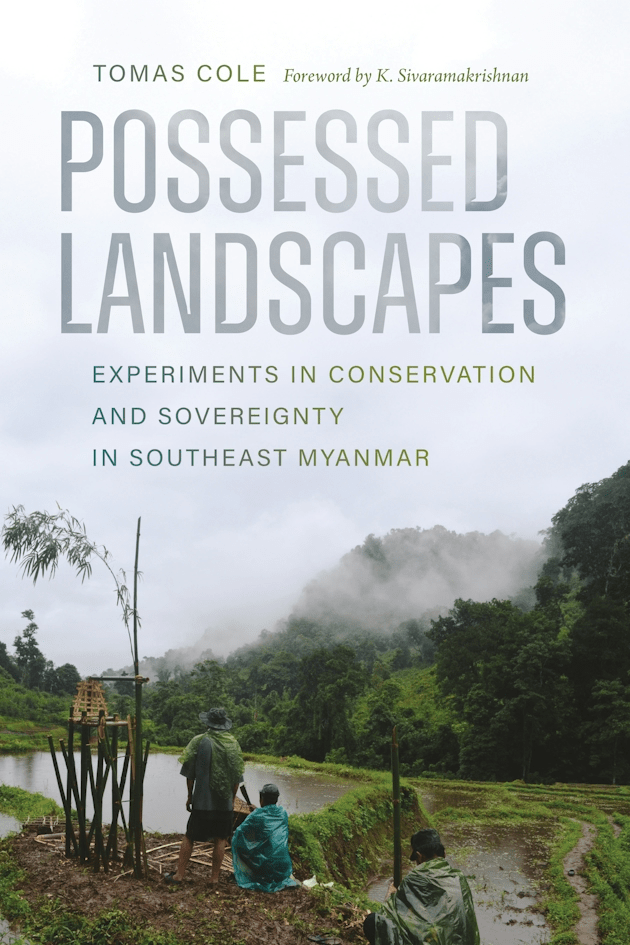
This week’s New Pubs features Cole’s book on conservation and sovereignty in southeast Myanmar; Davies and Htoon Oung on the ULA/AA’s “decentralization by force” policies in Western Myanmar; and Sullivan on the role of intermediaries in southeast Myanmar’s humanitarian response.
See our Recent Publications page for all of the citations and for past weeks, and if anyone wants a PDF but is excluded by pay wall, please email us and we will help if we can.
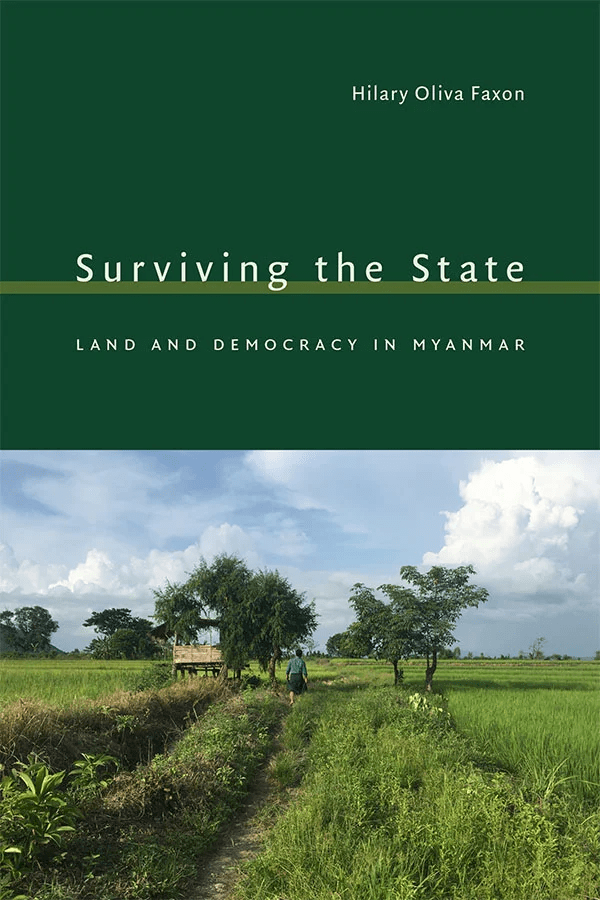
decription: In Myanmar’s Kalay Valley, a rice-growing region near the Indian border, farmers have long been subject to violence and neglect. Surviving the State considers how these farmers’ everyday, land-based practices enable them to endure successive authoritarian regimes. Through robust ethnography, Hilary Oliva Faxon describes how Burman and Chin smallholders treat land not only as a source of food, but also as a living thing entwined with the families it supports. She considers the centrality of land both to state efforts at control and to inhabitants’ ability to articulate claims, looking at how locals evade, obfuscate, and reinvent legal boundaries in the face of seizures, redistribution, and revolution. Providing a feminist ethnography of land politics, Surviving the State is a testament to the daily work of survival in the face of political violence.
This week’s New Pubs features Metro on the politics of acknowledgements in Burma Studies and Tsai on Kachin ethnic education in northern Shan state. Note there are only two this week, so send us your publications!
See our Recent Publications page for all of the citations and for past weeks, and if anyone wants a PDF but is excluded by pay wall, please email us and we will help if we can.
This week’s New Pubs features Houtman examining “do ayei” from chant to compact; Kim and Potter on Japan and Korea’s responses to Myanmar’s autocratization; and Lwin Cho Latt and Thidar Kyaw providing a Myanmar perspective on China/Indian machinations in the Indo-Pacific.
See our Recent Publications page for all of the citations and for past weeks, and if anyone wants a PDF but is excluded by pay wall, please email us and we will help if we can.
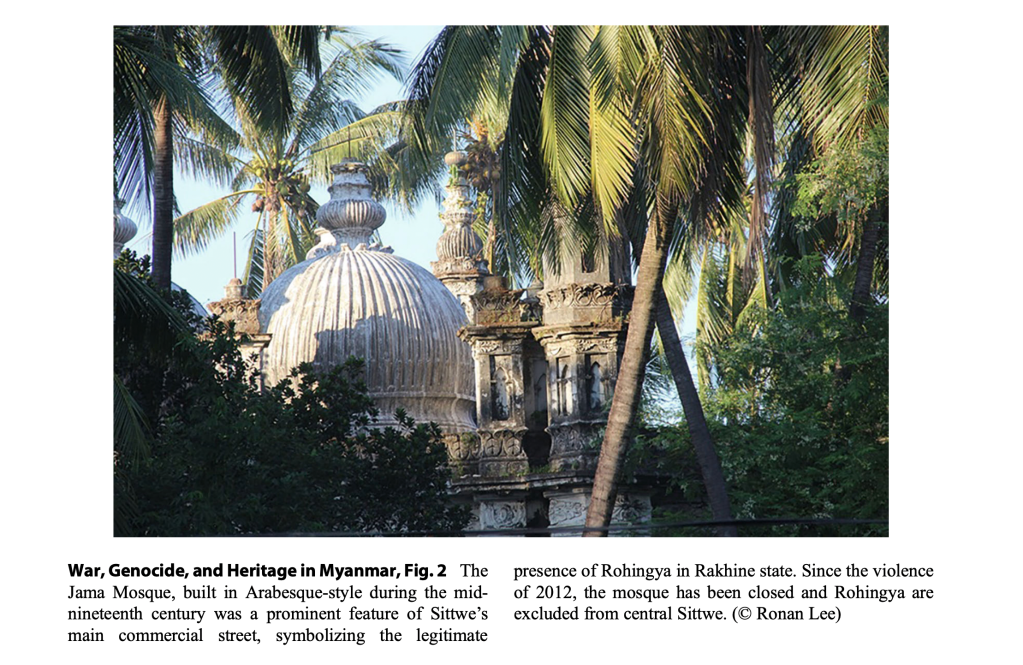
This week’s New Pubs features Lee and Zarandona on war, genocide, and heritage in Myanmar; K Yhome on Myanmar as an in-between space, in many ways; and Naung Naung on the use of transnational repression and the creation of new state spaces withing ASEAN.
See our Recent Publications page for all of the citations and for past weeks, and if anyone wants a PDF but is excluded by pay wall, please email us and we will help if we can.
Lee, Rónán, and Jose Antonio Gonzalez Zarandona. “War, Genocide, and Heritage in Myanmar.” The Palgrave Encyclopedia of Cultural Heritage and Conflict. Springer Nature Switzerland, 2026. 1-21.
This week’s New Pubs features You and Li on BRI-related Chinese migration in Myanmar; Akhter-Khan et al theorizing the exiled Burmese activist; and Naw Pe The Law et al on the Karen Women’s Organization.
See our Recent Publications page for all of the citations and for past weeks, and if anyone wants a PDF but is excluded by pay wall, please email us and we will help if we can.
Date: 17 February 2026 Time zone: 5.30-6.30pm AEDT, 1-2pm MMT, 7.30-8.30am CET Venue: register for online here
Description
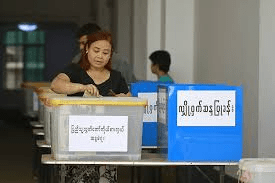
The third and final phase of Myanmar’s tightly controlled election concluded in late January, confirming the unsurprising dominance of the military-backed Union Solidarity and Development Party (USDP) in a poll without credible political challengers. Held in parallel with escalating regime offensives in resistance-controlled areas, the vote took place against a backdrop of ongoing repression, including the wielding of a harsh new electoral law that outlawed criticism. Voting was not possible in dozens of townships across the country that are held by groups opposed to Myanmar’s military, and key members of the country’s most popular political party, ousted in the 2021 coup, remain detained – along with thousands of others. What does the conduct and outcome of this election foretell for Myanmar’s near-term political future, including ongoing conflict? What may be the practical effects of this rebranding of dictatorship, however unconvincing? And how might relationships between the USDP and the military take shape in the coming months as key figures jostle for positions of power in Naypyidaw?
Joining us to discuss these issues as part of a panel are Su Mon Thant, Senior Analyst for the international organisation Armed Conflict Location and Event Data (ACLED), Tharindu Damith Abeyrathna, Senior Program Officer at the Asian Network for Free Elections (ANFREL), Min Khin Maung Yin, a freelance researcher with over three decades’ experience in political and social development, and Morten Pedersen, Senior Lecturer in International and Political Studies at the University of New South Wales (Canberra), who will chair the session. Each panellist will give opening remarks, up to 10 minutes each, followed by questions from the audience for the remainder of the hour.
Speakers
Su Mon Thant is an expert in conflict dynamics and democracy in Asia. She is an Asia-Pacific Senior Analyst in the international organization Armed Conflict Location and Event Data (ACLED). She holds an MA in Politics and International Relations from Keele University (UK) and is a 2025 Research Fellow for the Myanmar-Australia Visiting Fellowship Program at the University of Melbourne, and The Australian National University. She has researched Myanmar’s politics and society for over a decade, including as an accredited observer of the 2015 and 2020 Myanmar elections.
Tharindu Damith Abeyrathna holds the position of Senior Program Officer for Campaign and Advocacy at the Asian Network for Free Elections (ANFREL). Tharindu served as the resident officer in Myanmar on behalf of ANFREL. In this capacity, he played a significant role in advancing the cause of free and fair elections, while also enhancing the capacity of civil society, media, and election management bodies in the country. Tharindu holds a bachelor’s degree in International Relations from the University of Colombo and is pursuing a Master’s Degree in Human Rights and Democratization, underscoring a commitment to advancing democratic values and electoral integrity in the Asian region.
Dr Min Khin Maung Yin is a freelance researcher, senior adviser, and course convenor working with several organisations. He has over 30 years of experience in political and social development, with a particular focus on conflict analysis and peacebuilding. He holds a PhD in International and Political Studies from the University of New South Wales at the Australian Defence Force Academy, Canberra. He also earned a Master of Diplomacy and a Master of Public Policy from The Australian National University.
Chair: Dr Morten Pedersen is Senior Lecturer in International and Political Studies at the University of New South Wales Canberra (Australian Defence Force Academy) and a former senior analyst for the International Crisis Group in Myanmar. In addition to teaching and research, he has worked as a policy advisor on Myanmar politics and development affairs for the United Nations, the World Bank, the European Commission, the Australian government, and Nobel Peace Prize laureate Martti Ahtisaari, among others.
This week’s New Pubs features Chambers on women’s care work and political placemaking on the Myanmar/Thai border; Bowser on the political economic foundations of the colonial-era conflict between Rohingya and Rakhine; and Mandelkorn on the political-ecological foundations of the Saya San rebellion.
See our Recent Publications page for all of the citations and for past weeks, and if anyone wants a PDF but is excluded by pay wall, please email us and we will help if we can.



 Burma Studies Group