Does Myanmar’s Potemkin poll change anything?
Date: 17 February 2026
Time zone: 5.30-6.30pm AEDT, 1-2pm MMT, 7.30-8.30am CET
Venue: register for online here
Description
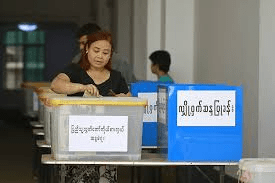
The third and final phase of Myanmar’s tightly controlled election concluded in late January, confirming the unsurprising dominance of the military-backed Union Solidarity and Development Party (USDP) in a poll without credible political challengers. Held in parallel with escalating regime offensives in resistance-controlled areas, the vote took place against a backdrop of ongoing repression, including the wielding of a harsh new electoral law that outlawed criticism. Voting was not possible in dozens of townships across the country that are held by groups opposed to Myanmar’s military, and key members of the country’s most popular political party, ousted in the 2021 coup, remain detained – along with thousands of others. What does the conduct and outcome of this election foretell for Myanmar’s near-term political future, including ongoing conflict? What may be the practical effects of this rebranding of dictatorship, however unconvincing? And how might relationships between the USDP and the military take shape in the coming months as key figures jostle for positions of power in Naypyidaw?
Joining us to discuss these issues as part of a panel are Su Mon Thant, Senior Analyst for the international organisation Armed Conflict Location and Event Data (ACLED), Tharindu Damith Abeyrathna, Senior Program Officer at the Asian Network for Free Elections (ANFREL), Min Khin Maung Yin, a freelance researcher with over three decades’ experience in political and social development, and Morten Pedersen, Senior Lecturer in International and Political Studies at the University of New South Wales (Canberra), who will chair the session. Each panellist will give opening remarks, up to 10 minutes each, followed by questions from the audience for the remainder of the hour.
Speakers
Su Mon Thant is an expert in conflict dynamics and democracy in Asia. She is an Asia-Pacific Senior Analyst in the international organization Armed Conflict Location and Event Data (ACLED). She holds an MA in Politics and International Relations from Keele University (UK) and is a 2025 Research Fellow for the Myanmar-Australia Visiting Fellowship Program at the University of Melbourne, and The Australian National University. She has researched Myanmar’s politics and society for over a decade, including as an accredited observer of the 2015 and 2020 Myanmar elections.
Tharindu Damith Abeyrathna holds the position of Senior Program Officer for Campaign and Advocacy at the Asian Network for Free Elections (ANFREL). Tharindu served as the resident officer in Myanmar on behalf of ANFREL. In this capacity, he played a significant role in advancing the cause of free and fair elections, while also enhancing the capacity of civil society, media, and election management bodies in the country. Tharindu holds a bachelor’s degree in International Relations from the University of Colombo and is pursuing a Master’s Degree in Human Rights and Democratization, underscoring a commitment to advancing democratic values and electoral integrity in the Asian region.
Dr Min Khin Maung Yin is a freelance researcher, senior adviser, and course convenor working with several organisations. He has over 30 years of experience in political and social development, with a particular focus on conflict analysis and peacebuilding. He holds a PhD in International and Political Studies from the University of New South Wales at the Australian Defence Force Academy, Canberra. He also earned a Master of Diplomacy and a Master of Public Policy from The Australian National University.
Chair: Dr Morten Pedersen is Senior Lecturer in International and Political Studies at the University of New South Wales Canberra (Australian Defence Force Academy) and a former senior analyst for the International Crisis Group in Myanmar. In addition to teaching and research, he has worked as a policy advisor on Myanmar politics and development affairs for the United Nations, the World Bank, the European Commission, the Australian government, and Nobel Peace Prize laureate Martti Ahtisaari, among others.
source: Stimson center
 Burma Studies Group