In linguistic anthropology, there is a theory called “linguistic relativity” (often described through the so-called Sapir-Whorf hypothesis, which never actually was advanced by either Sapir or Whorf, tbf) that holds that there is a recursive relationship between cognition/culture and language. Meaning that if your language is shaped a certain way, you will think about the world in a certain way; that if you and your kind think about the world in a certain way, your language may eventually come to reflect it. So, as an example, if your language has a strongly grammatically marked future tense, you may think about the future in different ways than languages that do not.
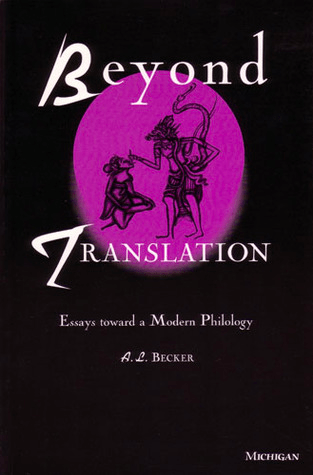
Anyway, A.L. Becker’s obscure writings on Burmese language probably could be described as taking the ling relativity hypothesis too far, but they are nonetheless pretty fascinating as suggestion rather than science: compelling us to open up our eyes to the way that language may operate on thought.
see here for PDFs and for the entire Cuts series.
 Burma Studies Group